Sunday, May 31, 2020


Fun Facts: Pressed by the Coercive Acts (see last week's post), the colonies took action. One of the actions was the gathering of delegates for the First Continental Congress which met September 5, 1774, in Philadelphia. Each colony, except Georgia, sent delegates. George Washington, Richard Henry Lee, and Patrick Henry were among the delegates in attendance from Virginia. One of the proposals discussed was A Plan of Union of Great Britain and the Colonies, which provided for a popularly elected Grand Council which would've been the equivalent to the English Parliament, and a President General appointed by the crown. Even at that time, some of the delegates favored independence rather than simple legislative equality with England.

The congress organized a boycott against British goods, and petitioned King George III for redress. The congress resolved to reconvene in May 1775 if the response from England was not favorable.

England responded to the boycott with the New England Restraining Act which forbade the colonies from trading with anyone other than Britain and the West Indies, and prohibited colonial ships from the North Atlantic fisheries. The petition to the king was as equally well received.

When the congress reconvened in May 1775, the Revolutionary War had already begun.


Cover Reveal:


Having finished the writing and having very nearly completed the proofing, it's quite possible that this e-book will be available next week. The hard copy will take a little more time to format. The third book in the trilogy will end the first part of the saga which is set during the Revolutionary War. Most of the action in the second and third books takes place in the wilderness away from the major military battles. Small skirmishes, battling dragons, magic, gryphons, and more bad guys like that one on the cover carry this part of the story on the way to the surprising conclusion.

You should pick up the first two books, Threading the Rude Eye, and Power to Hurt--get them now. If you would like a free review copy, let me know in the comments.

***

I finished reading Andre Norton's Star Born this week. I know that I had read something by her when I was a kid and I didn't like it--and hadn't read anything by her since. I shouldn't have judged all her work by that one book--whatever it was. I enjoyed Star Born. I'm not going to rehash the story for you. You can read it yourself. It's free on Amazon.

While you're at Amazon, pick up Manly Wade Wellman's The Golgotha Dancers. It's a short, quick read that seems like it should be a Night Gallery episode. It's a quick read--and it's also free.

I'm interested in reading Wellman's "A Star for a Warrior," for which he won the Ellery Queen Award, and which caused Faulkner get bent out of shape that his entry did not win because he was a true literary author while Wellman was not. I haven't found the story anywhere yet.


Sunday, May 24, 2020

"Witch hunts are really only obnoxious for the witches."

"Canada is America's hat."

These were two of the comments I overheard yesterday during a game of Apples to Apples. I take no responsibility for, nor do I endorse the comments, but I did find them entertaining.

Fun Fact: The British, having utterly failed to understand the position of the American colonists, decided that the best answer to the Boston Tea Party was the adoption of the Coercive Acts aimed at punishing Boston and Massachusetts. The Coercive Acts closed Boston Harbor until the damages for the loss of the tea were repaid, restricted Massachusetts' town meetings and made the governor's council an appointed body, made British officials immune from prosecution in Massachusetts, required colonists to house and quarter British troops on demand, and also extended freedom of worship to Catholics in Canada and allowed the continuation of their judicial system.

If the British thought the Coercive Acts would isolate Boston and Massachusetts from the rest of the colonies and prevent the fomenting of unified resistance to British rule, they should have thought again. The colonies sent supplies to Boston, formed committees of correspondence, sent delegates to the First Continental Congress, and mobilized resistance to the crown. Parliament's actions succeeded in pushing the colonists toward rebellion rather than reconciliation.

The drawing above, illustrates the perception of the Coercive Acts -- forcing the colonies, represented by the native woman, to drink the tea.

***

I endeavored to finish writing Clamorous Harbingers, book three of the Tomahawks and Dragon Fire trilogy. I completed the draft on Friday night -- except for the paragraph or two I remembered that I needed to add after I went to bed, which I did add on Saturday. I could go on about how fabulous the trilogy is, and how fabulous is the book which ends this first part of the saga, but modesty restrains me. Now it's time for the editing. It shouldn't take long.

Oh--I just saw an actor in a role who reminded me of the commander in Tomahawks and Dragon Fire.


It's Brian Thompson in Dragonheart (1996). That is how I pictured the commander's face, complete with the moustache and beard. The only thing missing is the silver, rune-marked cylinder at the end of his beard.

***
I finished this book last week, or maybe it was the week before. It was on sale for cheap, maybe even free--I don't remember which. It's currently priced at $4.99, and the rest of the books in the series are $8.99 each.


I can see why Harlan Ellison once called Dan Simmons the best writer in the room. Hyperion, the first book in the 4 book Hyperion Cantos, could be described as--or rather, this is my shorthand description for it--The Canterbury Tales meets Keats and The Wizard of Oz in space. Dan Simmons has won several awards for his work, and this book was a Hugo Award winner. As you might expect, Simmons' writing is very nearly flawless. He shows a lot without revealing too much. Canterbury Tales' style, the characters in this epic take turns telling their own stories as they journey on a pilgrimage to The Shrine or Temple of the Shrike, near the Time Tombs on the planet Hyperion--which is named after Keats' unfinished poem. Time is a critical element in the story. One character's child is involved in a strange occurrence at the Time Tombs, and begins to age backwards. Another character has strange encounters with a warrior woman traveling through time. Travel by spaceship creates unusual time hitches in the aging process, such that some characters can be hundreds of years old in actual time, whereas their real age is much less. It's all very complicated. Religion is another significant theme. There's a priest, and a Jew who has lost his faith, and the whole religion of the Shrike complication. In addition to all of this, formidable enemies from outside threaten to attack, and one of the pilgrims is also a spy.

The book is long. long. long. I actually stopped about 60% through and read a couple different books to cleanse my palette, having grown fatigued with the story. One of the characters, a poet, is so obnoxious and foul-mouthed, that I could not stand to read his story. I may have skimmed part of that particular recitation. That may have been the primary reason that I needed a break from it before I could tackle it once more. Finally, the book ends without the completion of the journey. I shouldn't really complain about that, as I've done similar endings in my series. However, with a book of this length, I expected an ending more satisfying than what I got.

I have to conclude that Dan Simmons is a superlative writer -- and there are not many to whom I give that sort of praise. However, Hyperion wasn't a dish to my taste. I can't see myself resuming the tale. While I am curious about the further development of the story, the characters, and what may happen at the Temple of the Shrike, I didn't enjoy the experience sufficiently to want to invest in the remaining books.

Sunday, May 17, 2020

Fun Facts: The Tea Act of 1773 might have been a stone calculated to kill two birds. If it was, it didn't. The British East India Company had dire financial problems. The American colonies disputed parliament's authority to tax and control them without elected representation. Parliament addressed both issues through the Tea Act with a tax of 3 pence on tea imported to the colonies. Of course existing legislation had already prohibited the colonies from importing tea from anyone other than Great Britain. Prior to 1773, the EIC didn't actually sell tea to the colonies, but sold it wholesale in Britain to merchants who then resold it to merchants in the colonies. As a result of a colonial boycott on British products, in 1770 Parliament had actually repealed most of the taxes in the Townsend Acts. The tax on tea was one of those not repealed; it was maintained as a show of authority to tax the colonies. With repeal of the Townsend taxes, the colonies lifted the boycott and trade flowed--including tea taxed at 3 pence per pound. However, in 1772 Parliament put a duty of 10% on tea imported into Great Britain and restored other taxes on tea. As a result, tea sales in Britain fell, but the EIC kept importing the tea, creating a tremendous stockpile of unsold tea. As one would expect, this created a financial crisis for the EIC. Additionally, the tea tax was used to pay the salaries of some colonial governors and judges. Parliament's solution through the Tea Act of 1773, was to refund the EIC's duty on imported tea, and to allow the EIC to export tea directly to the colonies. The EIC appointed merchants in the colonies to receive the tea on consignment who would sell the tea for a commission. The three pence per pound tax in the colonies remained in place to provide the salaries for governors and judges.

Americans learned of the Tea Act while 7 ships laden with tea were on the way to the colonies. The Sons of Liberty began to raise protests, and forced the consignees in Charleston, Philadelphia, and New York City to resign. The tea ships in those ports returned to England. In Boston, two of the tea consignees were the governor's sons. The Boston consignees did not resign. The Dartmouth arrived in Boston loaded with tea. By law, it was required to unload within 20 days or have its cargo confiscated. The Sons of Liberty urged the captain to send the ship back without paying the tea tax. Governor Hutchinson refused to allow the Dartmouth to leave. Two more tea ships, the Eleanor and the Beaver arrived. In December 1773, a small band of colonists, some of whom were dressed as native Americans, went aboard the three ships and dumped overboard the entire shipment of tea.


Seeing that a little tax resulted in a little rebellion, the British Parliament decided to up the ante, or rather to compound one mistake with another, by passing the Coercive Acts of 1774 to make an example of Massachusetts to discourage colonial resistance. We'll visit how that worked out on another day.

***

As if often the case, my prediction last week for completing Clamorous Harbingers this week proved overly optimistic. At about 118K words, the action packed story which completes the Tomahawks and Dragon Fire trilogy which is the first part of the epic story in the flintlock fantasy/alternate history of the American Revolutionary War. I will endeavor to complete the fantastic tale this week.

***


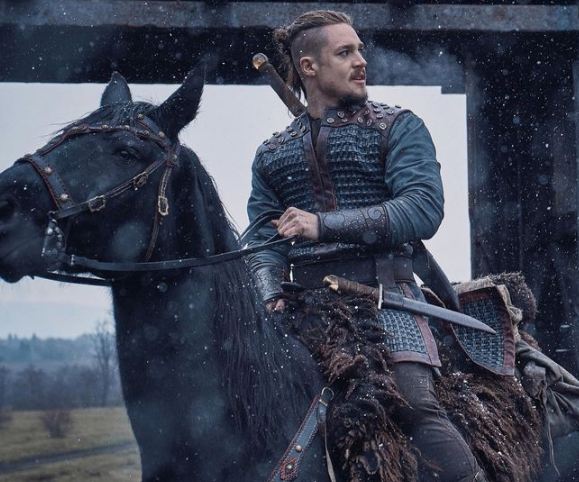
I've completed my vidangel watch of The Last Kingdom season 4. While not as good as the first two seasons, it was better than season 3 in some ways. King Edward has been a disappointment from the start, and with only a couple exceptions, he consistently chooses the worst option available. His mother, on the other hand, has been a complete termagant through the first three seasons. In the fourth season she makes an about face, proving to be the voice of reason which Edward largely ignores. Uhtred's son figures prominently in the early episodes of the season, and his daughter rises to prominence in the later episodes. Aethelhelm, despite having one of the coolest names, becomes the evil advisor who is easy to loathe. Brida, Uhtred's former friend is my odds on favorite to die a violent death in an upcoming season based on her implacable hatred for Uthred, because he allowed her to be taken prisoner by the Welsh. Brida and Edward are the weakest characters in season four in my opinion. Uthred's companions, Finan, Osferth, and Sihtric, are the most likable. It would be nice to see them developed further. Sigtryggr, the new Dane du jour, also has interesting potential for future development. I suspect the season 5 will be the last for Aethelflaed (Edward's sister, and new Queen of Mercia)--if the series follows the actual history. I give the season  3.5 Saxon brooches out of 5.


Sunday, May 10, 2020


Strap down the grey matter and hold on to your cerebellum (not to be confused with antebellum or parabellum) Clamorous Harbingers will give your mind a ride! (Yes. I was listening to Boston when that bit of self promotional inspiration came to me).

Not yet, but soon. My proclamation is premature as I've not yet completed the book. However, "Havoc!" has been cried, and the dogs of war let slip. The battle at the cache to shape the future of empires and liberty's struggle has commenced.

Perhaps I should go into television repair. I performed a life-extending surgery on our television. The IR sensor which reads the remote had gone bad. It had started as a frequent but not complete failure to respond to the input from the remote control. In a matter of days, the failure to hearken waxed into willful rebellion such that all commands had to be given by physical administration. Wife picked up a new remote, but the TV's fault, like that of Brutus, lay not with the stars or the remote, but within itself. I did some searching, narrowed down the problem, and postponed action when I couldn't find the correct part in stock. A few days later, I, like Ayn Rand's Atlas, shrugged, escaping the burden of indecision and located the replacement part online. I waited until Saturday to perform the operation.

Here is the part I removed (It's held in place by two screws and attaches to a little plug by the white connection at one end.):


The main difficulty was in opening the patient to get at the components within. I prepped the TV for surgery by removing all the cords which connected it to power and auxiliary units, and moved it to the operating table. I should have taken pictures of the operation, but I didn't. Something like 300, or twenty-some screws held on the back cover - plus another eight which attached the stand. The operation--performed without anesthetic, I might add. I was awake the entire time--was a complete success. The patient has fully recovered and now hearkens to our commands.

***

Here's something short of a book review:


I read this. I thought about dropping out several times, but kept at it. I enjoyed Flint's 1632, but this one not so much. The story is told by Ignace, the strangler's manager. Ignace is clever and amusing. As a result, the humor in the story is more clever than entertaining. Rife with parody and satire the story references Dante's Inferno and other works (none of which spring to my recollection at the moment). The action has a cartoon-like quality, and provided me with the same amount of satisfaction. Great writing by Flint, but not quite a palate-pleaser for me. It's still free at the big river store--at that price, you can get it and judge for yourself.

***

This is the first story (to the best of my knowledge) that I have read by Manly Wade Wellman--who deserves to be read if only for the sake of his memorable name.


The Devil's Asteroid is a short story. It takes place on an asteroid where the protagonist is stranded by the Martians. I was able to predict most of the story's developments before they happened, but the narrative allowed me to feel smart and self-congratulatory in doing so, rather than that the writing was predictably unimaginative. It's also free--a quick, pleasant read.

***
I also read this short work:


The other editions have more interesting covers--but this version was free, and still is. One of the other editions claimed to be unexpurgated, so this one may be sanitized. It's a middle of the road sword and planet story by the Queen of Space Opera, and who was also known for her work on the movies The Big Sleep (1946), Rio Bravo (1959), Eldorado, and others. She also worked on an early draft of The Empire Strikes Back (1980), but she died before the movie went into production.

I see that her first novel was a mystery novel in the style of Raymond Chandler. So we have something in common (see my novel Smoke). Black Amazon of Mars ended Brackett's period of high adventure writing (according to Wikipedia).

As for the Empire Strikes Back: Her early draft was not used, but many of its story elements are in the final movie. Here is a PDF of that script. The opening looks the same as the actual movie, except Luke and Han ride white snow lizards (which I first misread as snow leopards--which would be super cool) instead of Tauntauns. Most importantly, Luke's father is a distinct character from Darth Vader. If you ask me (which you haven't, but I won't let that stop me), as I've probably mentioned before, that single decision (Vader as Luke's father) laid the foundation for the complete ruination of the franchise (See the prequels, and the final desecration--they all trace back to that ill-conceived brain vapor). Of course, I should expound on this sometime, but not yet. Also, in Brackett's script, Lando was one of the last surviving clone storm troopers. You can get more details on that script here.

So much for a book review become Bella Siderea trivia.

Sunday, May 3, 2020


Fun Facts: The Boston Massacre happened March 5, 1770. The British had sent more than 2,000 (some sources say 4,000) soldiers to occupy the city to enforce the various tax laws. Clashes between soldiers and colonists became more common as the latter's protests against British taxes often included vandalism against the stores of merchants selling British goods. When colonists attacked a loyalist's store in February, a customs officer living near the store fired on the crowd, killing an 11 year-old boy. On March 5, 1770, Private White was the lone soldier on guard outside a customs house on King Street. Angry colonists threatened him. He fought back with his bayonet. The colonists responded with snowballs, ice, and stones. In desperation, White called for reinforcements. Capt. Preston arrived with more soldiers. The situation escalated as the colonists struck the soldiers with clubs. Someone may have shouted, "Fire!" A soldier fired his musket. Others fired, killing five colonists and wounding six. The soldiers were soon arrested. Paul Revere produced a propaganda etching showing the soldiers starting the massacre.


John Adams represented the defendants and persuaded the judge to call a jury without any citizens of Boston in its composition. Preston and the soldiers were found not guilty of murder. Two soldiers were found guilty of manslaughter and had their thumbs branded.

Of course, things went downhill in Boston from there. I'll save for another day a recitation of additional facts contributing to the outbreak of the Revolutionary War. Revolutionary Boston of 1775 is the rude eye of revolution which my characters must thread--or pass through--in the first book of my Tomahawks and Dragon Fire trilogy: Threading the Rude Eye. I am literally figuratively beside myself with excitement and anticipation as I near the conclusion of the third book, Clamorous Harbingers. The word count has marched close enough to see the whites of the eyes of 110K. I hope to finish with the climactic battle this week and wrap up the book and first trilogy at around 120K words. (I may be overly optimistic in my expectation to finish this week). In the second book, Power to Hurt, the adventure takes most of the characters out of the settlements and into the wilderness controlled by Indians, gryphons, and dragons. The characters re-encounter old enemies, and meet new terrors in Clamorous Harbingers.

***

As you may know, the 4th season of Last Kingdom is out. I've watched via vidangel the first three episodes over the last couple weeks. I'm disappointed. Alfred died at the end of the third season, and his heir Edward has proved to be easily manipulated by his father-in-law. As for Uhtred, he has a son whose whiny and annoying characteristics are entirely overdone. The first two episodes of season four set up the beginning of episode three--which unfolded exactly as even the dullest of wits (including me) predicted. The rest of episode three suffers from an abundance of long, slow shots, prolonged (and not well done) mourning, and discussion with all the edge of my pre-sharpened mower blade. I'm confident that it will get better. I hated the beginning and first few episodes of season three--but Alfred's impending death and the potential turmoil which threatened to follow rekindled my interest. I would have been happier if the witch been left out of the third season entirely--hated that character and everything she did to that season. Maybe that's why I never commented on the show last season. Here's hoping for better episodes to come.

***

I've long entertained the idea that Edgar Rice Burrough's The Red Hawk, book 3 of the trilogy that began with The Moon Maid, was the inspiration for the Star Trek episode "The Omega Glory." In THR, the titular hero leads his people, who have lived like the Americans Indians for generations, to recover the last of their land (in California) taken by the Kalkars, the invaders from the moon. In TOG,  the Yangs recover the last stronghold held by the Comms (or Kohms). The Yangs carry Old Glory and have the Pledge of Allegiance and The Constitution of the United States. I like both of these. TOG is routinely denigrated as "cheesy" for the battle-scarred Star Spangled Banner which makes it's entrance near the end of the episode.


As for me, it's my favorite episode. Morgan Woodward (in one of his two outstanding appearances on the series) nails the bad guy role of the Starfleet Captain Ron Tracey. He is my favorite villain of the series, and is one of Kirk's most formidable foes in the circumstances of the episode. Also, you won't find anything like this in any other episode:


As for TRH, it's not Burrough's best, but it is exciting and the ending features some unanticipated aspects -- a reconciliation and joining of forces after an enmity that has spanned several generations. The real fight is against the Kalkars, rather than with the humans whom they have manipulated and enslaved. As I mentioned in my discussion of The Moon Men, the Kalkars are stand-ins for the Soviets. I guess ERB was saying that while there can by no reconciliation with communism, there can be a reconciliation between peoples.

Saturday, May 2, 2020


Author Interview
Kelly Blanchard
Author of The Chronicles of Lorrek


 Please tell me a little about your current work in progress.
My current work in progress is a series that my husband and I are co-writing. It takes place about a year after the events of the last book of the Chronicles of Lorrek. I am currently in the process of relaunching the Chronicles of Lorrek series though. It's going to be a lot of fun!

Where did you get the idea for this book or series?
I wish I knew! I don't know what exactly gave me the idea for the universe of Lorrek, but I do know where I got the inspiration for Lorrek. It was based off Loki from the Thor movies. I loved Tom Hiddleston's Loki, and I asked myself, “What if he's actually a good guy but just really, terribly misunderstood?” That took on a life of its own and created my main character. Of course, I don't have any norse mythology in my books, but the idea is still there.

Do you write in more than one genre?
I write fantasy and sci-fi, and sometimes I branch into other genres. I've touched upon steampunk and romance (though I've never made my romance the MAIN plot of the books). My story universe is so large that I can have it in whatever genre works best for the book.

Tell me about something that you believe makes your writing unique or worthy of attention.
I have been told that my books are very visual. My readers have told me that they can see the faces of the characters and the environment whereas with other books they've read, they can't really see things that clearly. They describe it as cinemagraphic. They have told me that the way my books handle the characters, their relationships and interactions are very real and relatable which is very important for the stories.


Is there anything about your personal history or personality that manifests strongly in your writing?
That's a good question. I don't consciously put stuff like that into my writing, but I do think that some of my personal habits and personality might bleed through. For instance, Lorrek, he's the kind of person who doesn't know when to stop and take a break. He sees something that needs to be done, and he sets out to complete it, regardless of how tired he may be or whether or not he has eaten. He will work until it's done. That is very similar to me!

What else would be helpful for readers to know about you?
What can I say? I'm just a real person who loves to write and share with my readers the imaginary world I have in my head. I also love to interact with my fans. It's a lot of fun when they message me, telling me that I've killed a character that they loved and ranting to me about it. It's quite fun. I am also love interacting with fellow writers, encouraging them, and offering my resources to them. It's a community, not a competition. If I can help, I want to.

Excluding your own work, what underrated author or book would you recommend that more people read? Why? Oh,there are so many! J.E. Mueller is the first one that comes to mind. For one, she's a great person in general, but she's also very talented as a writer, great with descriptions and pulling a story together. Definitely recommend her books!


Which of your books do you most highly recommend? Why?
Well, do you like dragons? Book 5 'You Left Me No Choice'. That's when dragons come in. But otherwise...I mean, Book 9 'This Ends Now' is epic, but it only carries weight when you have read all the other books, so...I'd have to go with Book 1 'Someday I'll Be Redeemed' and Book 2 'I Still Have a Soul' because they are very closely linked together (were originally one book that I had to split into two!). They begin the series, and I think it's a good starting point.


Which break, event, decision, or fortuitous circumstance has helped you or your writing career the most?
Well, meeting Matthew Dale, the man who would become my husband, was a big deal. It was because of him that I realized that the Chronicles of Lorrek wasn't just two books but MANY MORE books! So I owe a lot to him because he is my brainstorming partner and now co-writer. Then meeting Michael Evan, my PR agent, was huge for my career. With his help, I've been able to take my career to the next level.

What question do you wish you would get asked more often?
See, I know there is a question, but I can't for the life of me think of it at the moment. Ah well!

Do you have a catch-phrase or quote that you like? What is it? And why do you choose it?
I'm not sure if I have a catch-phrase or quote. I mean, my husband's and my motto is 'We'll figure it out,” but that applies mostly to real life though it can work in books too!

Thanks so much for the interview I greatly enjoyed it! 

Sunday, April 26, 2020


Before I tell you of the wrestle I had before the Craftsman war machine in preparation for an attack upon the green horde which has my castle nearly encircled, I must clarify the progress of Clamorous Harbingers (not to be confused with Glamorous Hamburgers). Having utterly failed to justly render an exciting conclusion to the trilogy at less than 100K words, I've decided to triumphantly end the book with not only the cataclysmic battle for the original McGuffin, but also with the clash in the caverns. I had thought to wait on the telling of the clash in the caverns until the next book, the beginning of the next trilogy, which I'm tentatively calling Wings of Rebellion, but it makes this conclusion perfect if I include it in this trilogy. My new goal is 120K words. I'm currently at around 105K, and each chapter is more awesome than the last.

It will blow you away!


Maybe not quite so literally as shown in this GIF, but, as Yoda would say, upon you a great impression made will be.

***

     I had a date with Destiny. On this day, Destiny had a mind of her own. It pained me to do so, but I had to cuff the dame around a bit to get her to see things my way. I set the date a couple weeks ago when I mowed the yard for the first time this year. The grass towered; the mower blades had all the sharp, incissive, trenchant characteristics of a wad of chewing gum--not a great combination. The war machine didn't so much cut the grass as give it a good roughing-up and warn it about what could happen next time. I had resolved to sharpen the blades before mowing again.

     The morning broke cool and clear like that first pointed paper cup of water from the cooler. The scent of insecticide wafted in from the neighboring field, and I relished the bitterness in my nostrils. I tightened my belt a notch, or I would have if I had been wearing a belt. Instead, I thrust my thumbs into the waistband of my Levis and drew them up an inch. This pair is a little loose in the waist and frequently cause me to feel like they might fall off. My wife bought me 3 pair of the articles (back when we had the brisk discussion about how I was patching my old jeans, as some of you may remember). Each pair is supposed to be the same size. One of the three fits snugly, the pair in question fit a bit loosely, and the third pair fit too tightly to comfortably wear--that's some kind of quality control they have going there. Anyway, as is my wont, I have digressed. Let me resume: I drew the jeans up an inch and strolled to the shed to select a number of old 2x6s to use as a ramp. Four was the number of the boards that I selected because I wanted to be certain the boards would hold; two felt flimsy, so I doubled them up. I lowered the tailgate on the pickup and placed the boards.

     With the table set for my date with Destiny, I confronted the Craftsman war machine. It started on my command. That's the sort of relationship we have: I command; it obeys--sometimes. I was relieved to discover that this was one of those times. I drove it part way up the ramp, enough to expose the deadly underbelly of the beast. I set the brake, killed the motor, and made a perfect dismount. Only the Russian judge marked me down out of spite, and the war machine rolled back down the ramp.

Destiny can be a fickle lass, retracting her favor just when victory seems assured. As she withdrew her favor, I slapped the retreating hand by insisting on victory: I would take advantage of the angle of the war machine and jack it up and tip it backwards to rest upon braces at the rear. Destiny laughed. When I jacked the monster higher, using two cinder blocks as the base for the jack. I raised the machine from the ramps sufficiently for it to begin to tip to one side. Not only did my blocks and jack prevent me from accessing the underbelly from the best position, the thing would never stay in place once I started twisting the bolts. I had to rethink the attack.

With Destiny's cackling laughter still ringing in my ears, I allowed that I would have to do what I had hoped to avoid. I moved the pickup to the back of the house where the ground falls away in a short but steep slope. With the boards in place, I drove the machine upon the ramp once more and set the brake. Now that the ramp angle was much less than the roughly 60 degrees (maybe less than 30 degrees here) the machine did not roll back. I had access to the mower blades. The 5/8th socket from my grandfather's old socket set proved to be the only socket that would fit the two bolts which held the blades in place. With the a hearty taunt, I showed Destiny the back of my hand, and removed the mower blades.

I thought I heard a faint giggle as I took the first blade to the bench grinder my father-in-law had given me some 30 years ago. The grinder had seen little use, but it had served me well when I had needed it. The grinding wheels didn't turn when I hit the power switch. They groaned like a sick bison in labor, but they refused to turn--which is something you expect wheels to do (turn, I mean, not groan like a bison). I assisted the wheels and got them going. When I touched the metal of the mower blade to the spinning wheel, the wheels slowed, and stopped--not the most desired result, not in the top three, in fact. Destiny loosed a peal of laughter which clawed at my ears like a wildcat with a migraine.

     I was not to be deterred. I knew how to solve this problem. I pushed Destiny away. She tripped on the hem of her long gown and fell to the ground in a sullen heap. I stepped over her to go for the secret ingredient, that salver of wounds, saver of days, and repairer of broken tangibles: money. I grabbed a modest handful of cash and headed to one of the local hardware establishments. Once upon the premises, with neither mask nor scrip, I might add (well, maybe scrip or sorts; I had cash), I confronted a dilemma. (Would a dilemma, be two lemmas?) Should I get the bench grinder for $50.00, or the hand grinder for $30.00?

     Upon reaching the checkout with my purchase, I faced another difficulty. Only one register was open. One guy was at the counter where the clerk stood behind a freestanding sheet of plexiglass, but neither wore a mask nor had any other sort of microbial protection. That wasn't the problem. The problem was figuring out who was ahead of me in the line. Someone stood on a piece of red tape on the floor. A guy in a hat stood farther way to the side, opposite of my approach. I figured I would wait casual like to see if the hat guy planned to approach the checkout. I could only hope there weren't more people lined up behind him, ready to pop into view like clowns from a tiny car, if I tried to approach the register. I learned all I needed to know when a masked lady carrying a small potted plant marched toward the counter with the intent of stepping up behind the guy on the tape. As she passed me, she suddenly drew up when realization that these were strange times tapped her on the shoulder. She looked at the guy in the hat.

     "Are you in line?" she asked of l'homme au chapeau.
     "I'm right after that guy," he pointed to the man waiting on the tape.
     She looked at me, "Are you in line too?"
     "I'm after him, unless there's someone behind him down that aisle," I replied.
     "Oh," She said. She moved back to stand behind me.

     Her confusion was understandable. Hat guy and I weren't adjusting ourselves to align with the tape on the floor which stretched down the aisle between us as we had approached from opposite sides of the register rather than up the marked aisle. That's the way we rolled.

     I paid with cash and didn't bother trying to stand behind the plexiglass as it would have been impossible to pass the money through the glass, there being no openings in it. The clerk didn't seem to care, and neither did I.

     As for the rest of my date with Destiny, that skirt snickered a few times as I assembled the hand grinder, but she was soon laughing out of the other side of her face. I ground cutting edges onto the mower blades that would make a sous chef squeal with delight, but, honestly, no one would want to cut their food with those mower blades. Not only would it be awkward, and gross because of the hardened residue of grass gore upon parts of the blade, because, although the edge may be sharp, the blades are too thick to slice meat, tomatoes, bread, and most other things--carrots, they might be okay for slicing carrots, or celery, but a knife would still be better. I see that I have digressed again. Please go to the next paragraph.

Destiny stood by in silence as I reattached the mower blades. She left and I had to lead the attack against the green horde by myself. Once more, the war machine and I took the battle to the enemy, literally mowing down the horde. The casualties were too many to number.

***

Bonus Shakespeare quote that is appropriate for the current time:

"And you all know, security
Is mortals' chiefest enemy." --Shakespeare, MacBeth, Act III, Scene 5.