Showing posts with label Independence Day. Show all posts

Sunday, July 6, 2025

Independence Day 2025


It was Independence Day. The Fourth of July. The ogygia of summer. I name it the latter, not because we're trapped there and must choose between Calypso and escape, but because it is the center point about which summer revolves. In Byzantium this year, it brought dark clouds and rain.

We usually get our own fireworks to celebrate our right to watch our money become transformed into disappointing fountains of sparks of various ilk, but this year we did something that I don't recall having done before. We watched A Capitol Fourth on PBS. There were non-obnoxious musical acts on or near the White House lawn. They sang patriotic songs, had military bands and anthems, and presented old and new talent. People who wanted to celebrate America attended, waived little flags, sang along, and enjoyed themselves. Even the hosts repeated, "God Bless America," without fear or concern of offense. The fireworks display afterward as the Beach Boys sang a medley of favorites, with other singing and instrumentals, including Sousa's patriotic presentations, brought the celebration to a climax. It was spectacular.

We've experienced the pinnacle of summer. From here on it's a reluctant but inevitable slide down the slippery pole of glorious summer into the heap of leaves we call fall.  

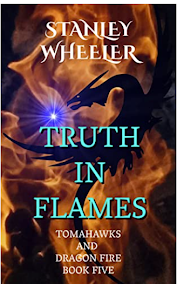
As part of my celebration of Independence Day, I've reduced the prices on most of my ebooks to $3.99 and Truth in Flames, book 5 of the Tomahawks and Dragon Fire Series to just $2.99.

image

It's the book that covers the Declaration of Independence and the battle in words and deeds to set forth and preserve the important truths. You'll hate yourself for not getting it - or not. Anything's possible. It's the book that made Iago a favorite character for some, or maybe that was the previous book. It's hard to keep track of the exciting adventures.

In other news, Raconteur Press has expressed a desire to publish my adventure book for boys. That's fabulous news! 


Sunday, July 2, 2023

The Atlas of Independence


John Trumbull's Declaration of Independence

 Below is my version of a portion of John Adam's speech in support of declaring independence -- from Truth in Flames, p. 292.

“Let King George send his armies and navies against us. Let him turn to foul and hellish beasts who descend upon us with death and destruction. We will not be dismayed! We are consumed by the Spirit of Liberty, endowed by Providence with a Fire for Freedom. Though the Supreme Commander, unhallowed creatures, and calumnies by the crate combine against us, we shall prevail. No weapon raised against us shall prevail if we but have the courage to stand, to declare our independence, our purpose, and our power. You have heard me repeat the reasons for independence so often that you can recite them in perfect imitation. Let those arguments, those sound reasons, echo in your hearts and minds. Your souls themselves yearn for this declaration. We declare not only the independence of these colonies, we articulate the desire of every soul that ever did yearn and that will ever yet yearn to be free of tyranny.”

Other delegates called Adams an angel sent to illuminate the Congress, a pillar in support of independence, and the Atlas of American Independence. If Washington was the sword, and Jefferson the pen, Adams was the voice of independence. 

Adams went on to serve as a diplomat to France and was also appointed to negotiate the Treaty of Paris ending the war. He was the first ambassador to England. While in England he wrote the three volume treatise: A Defense of the Constitutions of Government of the United States of American, which defended the principle of separation of powers in the state constitutions. In volume II he wrote:

We have all along contended, that the predominant passion of all men in power, whether kings, nobles, or plebeians, is the same; that tyranny will be the effect, whoever are the governors, whether the one, the few, or the many, if uncontrolled by equal laws, made by common consent, and supported, protected, and enforced by three different orders of men in equilibrio.

He was Washington's vice-president and became our nation's second president when he defeated Thomas Jefferson in the election. He lost to Jefferson in the next election, and Jefferson became the 3rd President of The United States of America. Both Adams and Jefferson died within hours of each other July 4, 1826.

_______________________

In celebration of Independence Day--something Adams wholeheartedly endorsed-- Clamorous Harbingers, book 3 in the Tomahawks and Dragon Fire Series is available for only 99 cents for a few days beginning July 3.  And Promise of Carnage and Flame, book 4 in the series is also reduced for the same time period. Get them now.

Although a good portion of the writing this week on book 6 has been on new chapters, I did have to go back a couple chapters to include a battle that is critical to the way things evolve in the story. Naturally, I can only blame myself for the oversight, but I would be happy to blame someone else if I thought it would stick.

I love weaving the fantasy elements into the historical story. The alternate history angle allows me to vary actual events in ways that fit the needs of my story and characters while preserving important elements in the historical narrative. The excerpt from my version of Adams' speech above is a good example. You might remember that the Supreme Commander and hellish beasts of death and destruction were not part of King George's historical arsenal--but they are in my story. It's the best of both worlds, as Sammy Hagar and Van Halen might say. Or it's the best of all possible worlds, as Candide would declare.

Sunday, July 5, 2020


A Declaration in the Shadow of Defeat


“The cause of America is in great measure the cause of all mankind,” wrote Thomas Paine. “The sun never shined on a cause of greater worth.” In the last days of 1775, the jubilation stirred by American heroics at Lexington and Concord, and Bunker Hill faded into harsh winter. The American invasion against the British in Canada met with failure beneath the walls of Quebec City when General Richard Montgomery, who had successfully taken Fort St. Johns and Montreal, was killed; Benedict Arnold wounded; and Daniel Morgan taken prisoner by the redcoats. British armies stood poised to invade New York through the Champlain valley, and from the sea. The president of the Continental Congress reported, “Our Affairs are hastening to a Crisis and the approaching campaign will in all probability determine forever the fate of America.” Such was the impending crisis which led to the Declaration of Independence.

In the wake of the disaster at Quebec, Thomas Paine published Common Sense. Paine renounced reconciliation with Great Britain and its tyrant king. He expounded upon the case for independence, the “bounteous change that would be to the benefit of generations yet unborn.” Paine’s pamphlet became the talk of the colonies, and the Continental Congress heard that talk. Word that King George sought German mercenaries with which to impose his will on America, and the terms of the American Prohibitory Act—another retaliatory measure designed to cutoff trade, shut down business, and endanger American shipping—augmented the voices for independence. Congress quickly came to an agreement with a French firm to provide oil, tobacco, and other provisions in exchange for arms and ammunition. The loss of significant portions of two armies enlarged the need for French supplies, French shipping, and French aid—none of which could be expected if a reconciliation with Britain remained a possibility. Congress had to declare independence in order to remain in the war.

In June Richard Henry Lee introduced in Congress a resolution declaring in favor of independence. While many of the colonies clamored for independence, others had not yet embraced that extremity. Congress recessed, appointing a committee to draft a declaration of independence. Jefferson completed the primary draft of the document—the statement of the American Cause. Although many expressions within the declaration can be traced to James Harrington’s Oceana, and John Locke’s Second Treatise on Government, the sentiment sprang from the recognition that government exists to serve the needs of the people, rather than that the people exists to serve the whims of the government.

When Congress reconvened to discuss the declaration, John Dickinson rose and spoke for two hours in favor of reconciliation. He warned against bringing France into the war, and favored the protection of Great Britain for prosperity and security. John Adams began a lengthy response, during which a storm of thunder and lightning rolled through Philadelphia. Accompanied by crashes of thunder, Adams declared for independence. He emphasized the necessity of foreign assistance for victory—and which would not be forthcoming without a separation from England. Nearly every member of Congress spoke upon the subject. While the delegates spoke, Howe’s ships approached the coast of New York. The New York legislature packed up at Howe’s approach, leaving its congressional delegates without direction on how to vote on the matter of independence. The remaining twelve colonies voted unanimously for independence. Nevertheless, a number of the individual delegates voted against independence. Dickinson resigned after the vote.
Congress soon approved the Declaration of Independence after making numerous changes to Jefferson’s draft. John Adams wrote to his wife that the acceptance of the Declaration of Independence “will be celebrated by succeeding generations as the great Anniversary Festival. It ought to be commemorated, as the day of deliverance, by solemn acts of devotion to God Almighty. It ought to be solemnized with pomp, shows, games, sports, guns, bells, bonfires, and illuminations, from one end of the continent to the other, from this time forward forever.” Of course Adams knew that the nation would pay a steep cost in blood and toil to maintain the Declaration; he saw beyond the immediate difficulties. “[T]hrough all the gloom, I can see the rays of light and glory; I can see that the end is more than worth all the means, and that posterity will triumph…” Perhaps once source of Adams’ optimism springs from the inspiring words of the document itself and the aspirations of the American Cause they proclaim:
 We hold these truths to be self-evident, that all men are created equal, that they are endowed by their Creator with certain unalienable Rights, that among these are Life, Liberty and the pursuit of Happiness.--That to secure these rights, Governments are instituted among Men, deriving their just powers from the consent of the governed…
Abraham Lincoln referred to the Declaration of Independence as words “fitly spoken,” an “apple of gold” which the Constitution was designed to protect. The ideals of the Declaration--the American Cause--were truly revolutionary in an age of kings and princes. Those principles remain the foundation of our liberty, the principles for which our forefathers pledged their blood, treasure and sacred honor.


Sunday, July 7, 2019

Let me first note that in the Spirit of 1776, I've completed 76K words on Power to Hurt, and I'm offering FREE pdf copies of the first book in the Tomahawks and Dragon Fire Series Threading the Rude Eye. Contact me through the comments and give me your email address to receive your free copy. This offer is good for a limited time. I hope to give away a hundred free copies before Power to Hurt is ready for purchase.


Independence Day marched in again to the sound of trumpets, drums, fireworks, fanfare, and whining. It's the latter that I'll address somewhere below. As for me and my house, we attended the veteran's march in our community. The A-10s roared over at the conclusion (or about fifteen minutes after the conclusion) for the fleeting pleasure of the happy, patriotic throng. Following the Wart hog fly-by, I had to go home to attend to a problem of no small significant. Fortunately, much like the song says, I got by with a little help from my friends--one friend in particular. Catastrophe slunk away in shame at having been averted stumbled to the curtain like an emaciated model wearing more heel than her frail limbs can manage making a retreat from the catwalk. I'm not looking forward to a return visit. All that and I still smoked pork ribs and steak for the celebratory dinner with family--and also wrote a few hundred words on Power to Hurt; I would've written more but the averting of the catastrophe swallowed part of the writing time. The only unfortunate bit of the holiday was the lack of cherry pie. As for lighting fireworks, I recommend the propane torch as the never-fail answer when matches are cheap and the breeze is brisk.

***

One whining incident of which I became aware concerned a tweet or other social media flatulence featuring a quote from Frederick Douglass. Others responded that that quote was taken out of context, etc. I've read the speech before, but it has been some years. I took the opportunity to read it again. 

Here's a link to the speech and I've included some portions here which I believe fairly represent the general tone and point of the speech.


Frederick Douglass' July 4, 1852, Speech


"This, for the purpose of this celebration, is the 4th of July. It is the birthday of your National Independence, and of your political freedom. This, to you, is what the Passover was to the emancipated people of God. It carries your minds back to the day, and to the act of your great deliverance; and to the signs, and to the wonders, associated with that act, and that day."
...

"Pride and patriotism, not less than gratitude, prompt you to celebrate and to hold it in perpetual remembrance. I have said that the Declaration of Independence is the ring-bolt to the chain of your nation’s destiny; so, indeed, I regard it. The principles contained in that instrument are saving principles. Stand by those principles, be true to them on all occasions, in all places, against all foes, and at whatever cost.
From the round top of your ship of state, dark and threatening clouds may be seen. Heavy billows, like mountains in the distance, disclose to the leeward huge forms of flinty rocks! That bolt drawn, that chain broken, and all is lost. Cling to this day — cling to it, and to its principles, with the grasp of a storm-tossed mariner to a spar at midnight."
...
"Fellow-citizens, pardon me, allow me to ask, why am I called upon to speak here to-day? What have I, or those I represent, to do with your national independence? Are the great principles of political freedom and of natural justice, embodied in that Declaration of Independence, extended to us? and am I, therefore, called upon to bring our humble offering to the national altar, and to confess the benefits and express devout gratitude for the blessings resulting from your independence to us?"
...
"What, to the American slave, is your 4th of July? I answer: a day that reveals to him, more than all other days in the year, the gross injustice and cruelty to which he is the constant victim. To him, your celebration is a sham; your boasted liberty, an unholy license; your national greatness, swelling vanity; your sounds of rejoicing are empty and heartless; your denunciations of tyrants, brass fronted impudence; your shouts of liberty and equality, hollow mockery; your prayers and hymns, your sermons and thanksgivings, with all your religious parade, and solemnity, are, to him, mere bombast, fraud, deception, impiety, and hypocrisy — a thin veil to cover up crimes which would disgrace a nation of savages. There is not a nation on the earth guilty of practices, more shocking and bloody, than are the people of these United States, at this very hour."
...
"Fellow-citizens! there is no matter in respect to which, the people of the North have allowed themselves to be so ruinously imposed upon, as that of the pro-slavery character of the Constitution. In that instrument I hold there is neither warrant, license, nor sanction of the hateful thing; but, interpreted as it ought to be interpreted, the Constitution is a GLORIOUS LIBERTY DOCUMENT. Read its preamble, consider its purposes. Is slavery among them? Is it at the gateway? or is it in the temple? It is neither. While I do not intend to argue this question on the present occasion, let me ask, if it be not somewhat singular that, if the Constitution were intended to be, by its framers and adopters, a slave-holding instrument, why neither slavery, slaveholding, nor slave can anywhere be found in it."
...
"Allow me to say, in conclusion, notwithstanding the dark picture I have this day presented of the state of the nation, I do not despair of this country. There are forces in operation, which must inevitably work the downfall of slavery. “The arm of the Lord is not shortened,” and the doom of slavery is certain. I, therefore, leave off where I began, with hope. While drawing encouragement from the Declaration of Independence, the great principles it contains, and the genius of American Institutions, my spirit is also cheered by the obvious tendencies of the age. "
Douglass' speech came, of course, prior to the Civil War (and before Lincoln's Gettysburg Address)  when hundreds of thousands of Americans went to war beneath the star spangled banner for the very purpose of holding the union together on a basis which extended the principles embodied in the Declaration of Independence. Those lives spent in dedication to the proposition that all men are created equal consecrated and hallowed this nation and its founding principles far beyond the power and whining of those with little understanding or appreciation to detract from that sacrifice of the last full measure of devotion. 

I must wonder: Does the blood of patriots yet hold this nation together? Although the principles in the Declaration of Independence remain hallowed beyond detraction, if those principles are not taught in union with the history of the sacrifices in blood and treasure that were required to give the principles substance and effect, the ignorant will reign, the machinery created to empower the principles will be subverted, and the people will morn until the tree of liberty is nourished yet again.
***
Finally, I seriously enjoyed writing on Power to Hurt this week with scenes of combat and carnage among ancient ruins and the first appearance in the series of my unique and fully armed and operational battle station matured fire-breathing dragon. I love it when a plan comes together. Honestly, the plan has been changing regularly--but it's only getting better.

Tuesday, July 4, 2017

Why do we do it?

There's something terribly satisfying about the way a sharp knife slices through a banana. Maybe all knives seem sharp when pitted against that firm yellow skin and soft white flesh. There's no doubt about who wins the clash of steel versus banana, but a nice clean cut evokes a sense of satisfaction not to be found in attacking the fruit with a less keen instrument such as a spoon or a shoe. So when I assisted some other gentlemen in preparing an Independence Day breakfast for the community, I did not mind putting several bunches of bananas, as well as a multitude of muffins to the knife.

Later, we attended the Fourth of July parade; it's actually the Veteran's Parade. Weiser is a small town. The big parade happened a couple weeks ago during the annual Fiddle Festival. The parade for the Fourth of July would be laughable in comparison, if it were not so serious. The local veterans gather at one end of State Street near the train depot. The spectators line both sides of the street. With a police escort, the color guard followed by the rest of the veterans march up the street for less than a quarter of a mile to Veteran's Park; those no longer able to march ride on a flatbed trailer decorated with flags. The spectators salute the flag and applaud the veterans. The parade passes by any given point for about 45 seconds.


The parade concludes beneath an American Flag hanging from the extended ladder of a firetruck. Afterward, an old flag (from the flagpole) is retired, and a new flag raised in its place. Local talent sings the Star Spangled Banner; the community later joins in singing God Bless America. The veterans introduce themselves, giving their name, rank and years of service. The spectators applaud after each introduction.

So why do we do this? Apparently others have asked themselves this question, and were unable to find a satisfactory answer. This year the number of spectators was the smallest that I have seen during my years as a member of the community. In previous years, a lunch of hamburgers, chips, and watermelon provided by the town at no cost after the parade drew a large number of people. Also, a fly-over by military jets, offered a brief visual spectacle. Perhaps those who have asked themselves why, and who did not attend this time, have found other ways or other places that provide a more fulfilling answer. Some, perhaps, simply don't know the answer--the summer soldiers and hamburger patriots, as Thomas Paine might call them today.

Tonight we will celebrate with fireworks displays, both public and personal. We celebrate our nation's birth, and mark that inevitable sliding away of summer, sweltering days speeding toward harvest, autumn, and the return to school. The fireworks are a tradition that can be traced back to John Adams' letter to Abigail about the Declaration of Independence; the fireworks displays began the following year in 1777.

Adams' letter also mentions parades as a form of celebration. But why do we do this parade? Why a parade of a handful of veterans, whose number shrinks with each passing year? Maybe the answer varies for each of us. To borrow from the words of Patrick Henry, "I know not what course others may take, but as for me," I do it because I am minting memories. We take this hot summer day and put it beneath the steel press of patriotism, stamping upon it the indelible impression of our flag and national identity; we remember the blood and treasure spilled to obtain and to secure the liberty and inalienable rights upon which this nation was founded; we honor not only the founding fathers, but those still living among us who have served to secure the freedoms for which so many have given the last full measure of devotion. There is plenty of time for pleasurable pursuits, but short is the time to honor those who have offered more than mere lip service to liberty. This parade and the community participation is one way for me to honor, and to teach my children to honor and appreciate liberty, and those who protect it.

Today we honored veterans of many conflicts, including the 96 year old crew chief for a fighter squadron who took the time to speak personally with my family. He joined in 1942. He remembered D-Day, telling us about the vapor trails that filled the sky from the passage of some 11,000 aircraft going and coming between Normandy that day. He proudly wore his black hat with "World War II Veteran" embroidered upon it. He remembered; we listened. What a great day.