Showing posts with label Last Kingdom. Show all posts

Sunday, May 17, 2020

Fun Facts: The Tea Act of 1773 might have been a stone calculated to kill two birds. If it was, it didn't. The British East India Company had dire financial problems. The American colonies disputed parliament's authority to tax and control them without elected representation. Parliament addressed both issues through the Tea Act with a tax of 3 pence on tea imported to the colonies. Of course existing legislation had already prohibited the colonies from importing tea from anyone other than Great Britain. Prior to 1773, the EIC didn't actually sell tea to the colonies, but sold it wholesale in Britain to merchants who then resold it to merchants in the colonies. As a result of a colonial boycott on British products, in 1770 Parliament had actually repealed most of the taxes in the Townsend Acts. The tax on tea was one of those not repealed; it was maintained as a show of authority to tax the colonies. With repeal of the Townsend taxes, the colonies lifted the boycott and trade flowed--including tea taxed at 3 pence per pound. However, in 1772 Parliament put a duty of 10% on tea imported into Great Britain and restored other taxes on tea. As a result, tea sales in Britain fell, but the EIC kept importing the tea, creating a tremendous stockpile of unsold tea. As one would expect, this created a financial crisis for the EIC. Additionally, the tea tax was used to pay the salaries of some colonial governors and judges. Parliament's solution through the Tea Act of 1773, was to refund the EIC's duty on imported tea, and to allow the EIC to export tea directly to the colonies. The EIC appointed merchants in the colonies to receive the tea on consignment who would sell the tea for a commission. The three pence per pound tax in the colonies remained in place to provide the salaries for governors and judges.

Americans learned of the Tea Act while 7 ships laden with tea were on the way to the colonies. The Sons of Liberty began to raise protests, and forced the consignees in Charleston, Philadelphia, and New York City to resign. The tea ships in those ports returned to England. In Boston, two of the tea consignees were the governor's sons. The Boston consignees did not resign. The Dartmouth arrived in Boston loaded with tea. By law, it was required to unload within 20 days or have its cargo confiscated. The Sons of Liberty urged the captain to send the ship back without paying the tea tax. Governor Hutchinson refused to allow the Dartmouth to leave. Two more tea ships, the Eleanor and the Beaver arrived. In December 1773, a small band of colonists, some of whom were dressed as native Americans, went aboard the three ships and dumped overboard the entire shipment of tea.


Seeing that a little tax resulted in a little rebellion, the British Parliament decided to up the ante, or rather to compound one mistake with another, by passing the Coercive Acts of 1774 to make an example of Massachusetts to discourage colonial resistance. We'll visit how that worked out on another day.

***

As if often the case, my prediction last week for completing Clamorous Harbingers this week proved overly optimistic. At about 118K words, the action packed story which completes the Tomahawks and Dragon Fire trilogy which is the first part of the epic story in the flintlock fantasy/alternate history of the American Revolutionary War. I will endeavor to complete the fantastic tale this week.

***
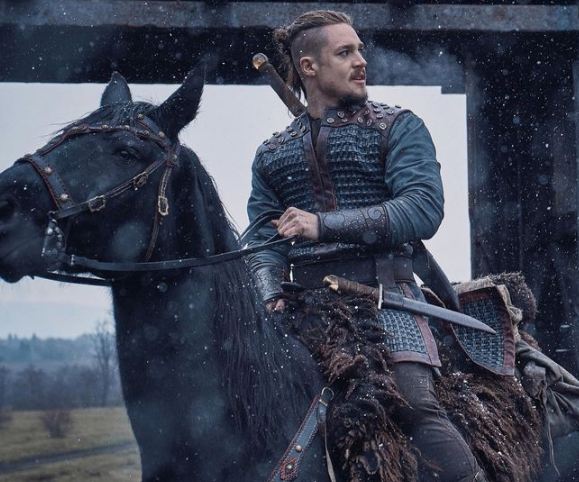

I've completed my vidangel watch of The Last Kingdom season 4. While not as good as the first two seasons, it was better than season 3 in some ways. King Edward has been a disappointment from the start, and with only a couple exceptions, he consistently chooses the worst option available. His mother, on the other hand, has been a complete termagant through the first three seasons. In the fourth season she makes an about face, proving to be the voice of reason which Edward largely ignores. Uhtred's son figures prominently in the early episodes of the season, and his daughter rises to prominence in the later episodes. Aethelhelm, despite having one of the coolest names, becomes the evil advisor who is easy to loathe. Brida, Uhtred's former friend is my odds on favorite to die a violent death in an upcoming season based on her implacable hatred for Uthred, because he allowed her to be taken prisoner by the Welsh. Brida and Edward are the weakest characters in season four in my opinion. Uthred's companions, Finan, Osferth, and Sihtric, are the most likable. It would be nice to see them developed further. Sigtryggr, the new Dane du jour, also has interesting potential for future development. I suspect the season 5 will be the last for Aethelflaed (Edward's sister, and new Queen of Mercia)--if the series follows the actual history. I give the season  3.5 Saxon brooches out of 5.


Sunday, May 3, 2020


Fun Facts: The Boston Massacre happened March 5, 1770. The British had sent more than 2,000 (some sources say 4,000) soldiers to occupy the city to enforce the various tax laws. Clashes between soldiers and colonists became more common as the latter's protests against British taxes often included vandalism against the stores of merchants selling British goods. When colonists attacked a loyalist's store in February, a customs officer living near the store fired on the crowd, killing an 11 year-old boy. On March 5, 1770, Private White was the lone soldier on guard outside a customs house on King Street. Angry colonists threatened him. He fought back with his bayonet. The colonists responded with snowballs, ice, and stones. In desperation, White called for reinforcements. Capt. Preston arrived with more soldiers. The situation escalated as the colonists struck the soldiers with clubs. Someone may have shouted, "Fire!" A soldier fired his musket. Others fired, killing five colonists and wounding six. The soldiers were soon arrested. Paul Revere produced a propaganda etching showing the soldiers starting the massacre.


John Adams represented the defendants and persuaded the judge to call a jury without any citizens of Boston in its composition. Preston and the soldiers were found not guilty of murder. Two soldiers were found guilty of manslaughter and had their thumbs branded.

Of course, things went downhill in Boston from there. I'll save for another day a recitation of additional facts contributing to the outbreak of the Revolutionary War. Revolutionary Boston of 1775 is the rude eye of revolution which my characters must thread--or pass through--in the first book of my Tomahawks and Dragon Fire trilogy: Threading the Rude Eye. I am literally figuratively beside myself with excitement and anticipation as I near the conclusion of the third book, Clamorous Harbingers. The word count has marched close enough to see the whites of the eyes of 110K. I hope to finish with the climactic battle this week and wrap up the book and first trilogy at around 120K words. (I may be overly optimistic in my expectation to finish this week). In the second book, Power to Hurt, the adventure takes most of the characters out of the settlements and into the wilderness controlled by Indians, gryphons, and dragons. The characters re-encounter old enemies, and meet new terrors in Clamorous Harbingers.

***

As you may know, the 4th season of Last Kingdom is out. I've watched via vidangel the first three episodes over the last couple weeks. I'm disappointed. Alfred died at the end of the third season, and his heir Edward has proved to be easily manipulated by his father-in-law. As for Uhtred, he has a son whose whiny and annoying characteristics are entirely overdone. The first two episodes of season four set up the beginning of episode three--which unfolded exactly as even the dullest of wits (including me) predicted. The rest of episode three suffers from an abundance of long, slow shots, prolonged (and not well done) mourning, and discussion with all the edge of my pre-sharpened mower blade. I'm confident that it will get better. I hated the beginning and first few episodes of season three--but Alfred's impending death and the potential turmoil which threatened to follow rekindled my interest. I would have been happier if the witch been left out of the third season entirely--hated that character and everything she did to that season. Maybe that's why I never commented on the show last season. Here's hoping for better episodes to come.

***

I've long entertained the idea that Edgar Rice Burrough's The Red Hawk, book 3 of the trilogy that began with The Moon Maid, was the inspiration for the Star Trek episode "The Omega Glory." In THR, the titular hero leads his people, who have lived like the Americans Indians for generations, to recover the last of their land (in California) taken by the Kalkars, the invaders from the moon. In TOG,  the Yangs recover the last stronghold held by the Comms (or Kohms). The Yangs carry Old Glory and have the Pledge of Allegiance and The Constitution of the United States. I like both of these. TOG is routinely denigrated as "cheesy" for the battle-scarred Star Spangled Banner which makes it's entrance near the end of the episode.


As for me, it's my favorite episode. Morgan Woodward (in one of his two outstanding appearances on the series) nails the bad guy role of the Starfleet Captain Ron Tracey. He is my favorite villain of the series, and is one of Kirk's most formidable foes in the circumstances of the episode. Also, you won't find anything like this in any other episode:


As for TRH, it's not Burrough's best, but it is exciting and the ending features some unanticipated aspects -- a reconciliation and joining of forces after an enmity that has spanned several generations. The real fight is against the Kalkars, rather than with the humans whom they have manipulated and enslaved. As I mentioned in my discussion of The Moon Men, the Kalkars are stand-ins for the Soviets. I guess ERB was saying that while there can by no reconciliation with communism, there can be a reconciliation between peoples.

Sunday, November 4, 2018


I am enjoying viewing via Vidangel The Last Kingdom series. I finished the last episode of season one this week. There were many annoying points in getting to this season finale, including, but not limited to, Uhtred losing his head and doing stupid things in anger so that Alfred can react by imposing a ridiculous punishment--such as having the only two competent commanders in his army fight to the death. Fortunately, an attack by the Danes upon Winchester prevented the completion of the punishment and both Uhtred and Leofric survived to become key players in Alfred''s defeat of the armies of Skorpa and Guthrum.

I read Bernard Cornwell's book of the same title upon which the series is based several years ago. It's a whole series of books but I only remember reading the first book. I was reading it at the public library during my lunch break. We moved away, and I can't remember if I got to finish it or not. I would like to read the series, albeit more cheaply than what I see for the book or ebook prices. Others have already written at length about the series--and I haven't checked to see what they say. I'm only addressing the final episode of the first season because it struck the perfect chord.

The picture below is from the culminating battle. It represents that perfect chord, the most satisfying moment of the first season when Alfred and his Saxons triumph after his return from the marshes. I note the second most satisfying moment of the season was earlier in the same episode when that sack of rancid gall known as Odda the Younger finally found peace through steel; his own father had to let the air out of him with a fatal thrust to shut the traitorous coward's mouth.


The journey to the season finale was frustrating and laborious, but Alfred's triumph with Uhtred's crucial assistance cleared away all those frustrations. The previous long struggle, the loss of the capital, the disappearance of Alfred to the marshes, and his quiet return to call the English (or the men of Wessex) to arms at Egbert's Stones proved to be very inspirational, blending all the strands into the perfect concluding chord. I wondered if Tolkien had based Aragorn's rallying of the Army of the Dead upon Alfred's gathering. The triumph of Alfred and the army provides the emotional payoff for the season--superbly rendered. It was a bit of a Henry V moment: "If we are marked to die, we are enow to do our country loss; and if to live, the greater share of honor."

In other news, my primary proofreader has returned the draft of Justice Resurgent with her notes and corrections. She is always very helpful. She had good things to say, and admitted that she cried when--well, obviously I can't tell you or it will ruin impact. So the sequel to my first book is nearing publication.

The new novel has moved along rather well this week. A lengthy third chapter brings together the strands from the first two chapters and sets up the course of the adventure. I think a reader should have some idea of where the story plans to go by the end of the third chapter. I found that having outlined the novel in general, I can now outline each chapter in more detail before writing it and the writing then goes much more quickly. Chapter four is outlined and underway. The direction is to Boston Harbor--hence the picture above. The main characters is this story are unlikely to say a line from Henry V that amuses me: "...but I will sell my dukedom to buy a slobbery and dirty farm in that nook-shotten isle of Albion."